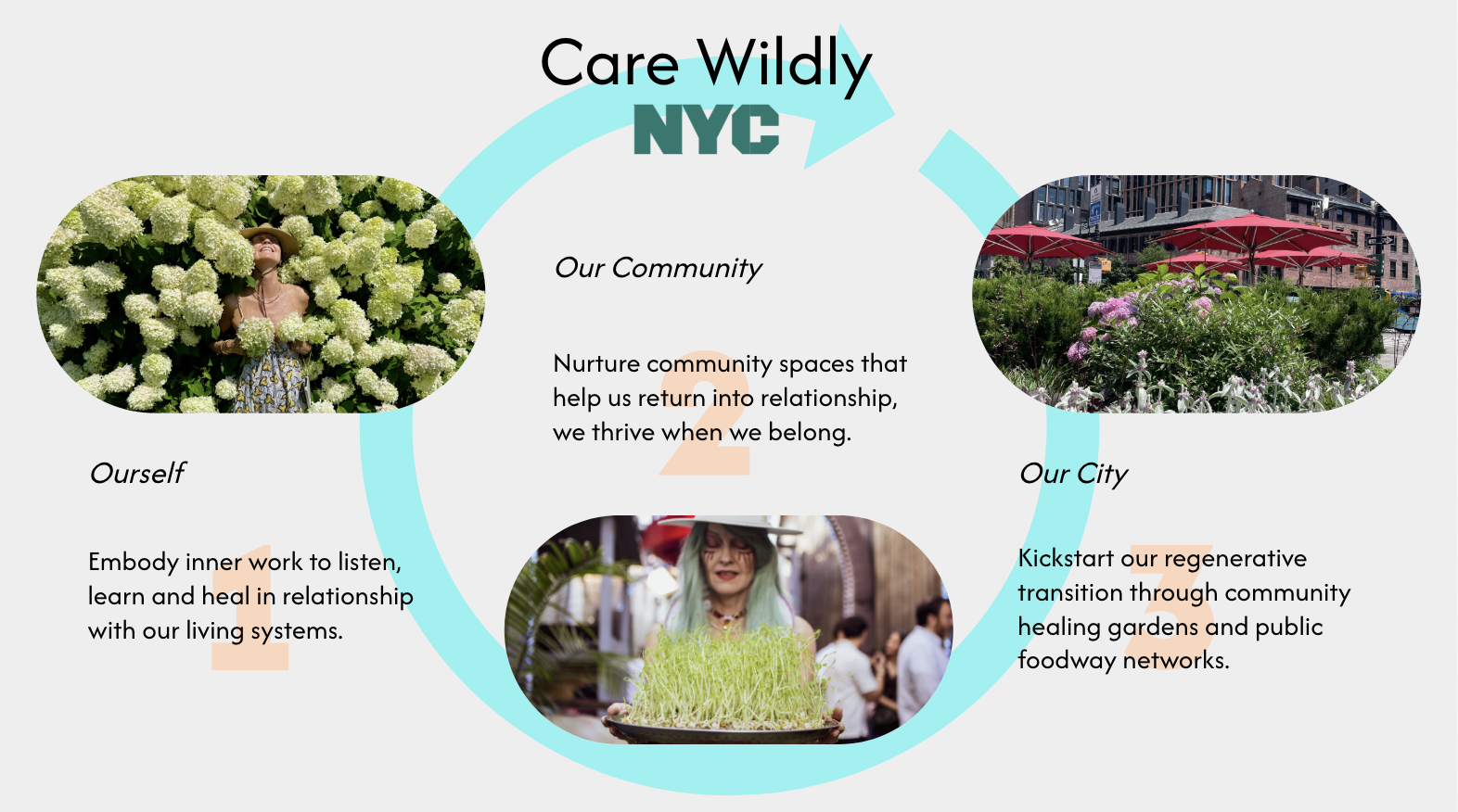
CARE WILDLY emerges through — ourself, our community, and city.
OURSELF
While there are many aspects of my life’s experiences that are incorporated and play intregal roles in the Care Wildly project, my research with Lo-TEK Institute introduced me to the ancestral intelligence of living systems that surround us and continue to thrive, The Presencing Institute taught me embodiment to open regenerative pathways, multi-systems change, and planetary healing, and group work with The Hoffman Institute nourished my spiritual growth and opened my mind to the complex and personal dimensions of leadership.
In the winter of 2025, I began a creative practice to move beyond anxiety, to break binary thinking, and discover new ways of being through the awe and wonder anchored in living systems. Here I expand my consciousness and practice releasing ego by tethering my knowing to a universal (un)knowing of infinite possibilities beyond our modern world’s dominating, extractive systems.
When I embody my highest potential self—Mother Earth—I learn to gesture between nothingness and everything. Water teaches me to be a life-giving source and undergo dramatic ‘changes of state.’ When we listen, Mother Earth Talks Back.
“Like water, become a life-giving source.
Flow where you are needed.
Carry renewal wherever you go.
What you give returns to the whole.”
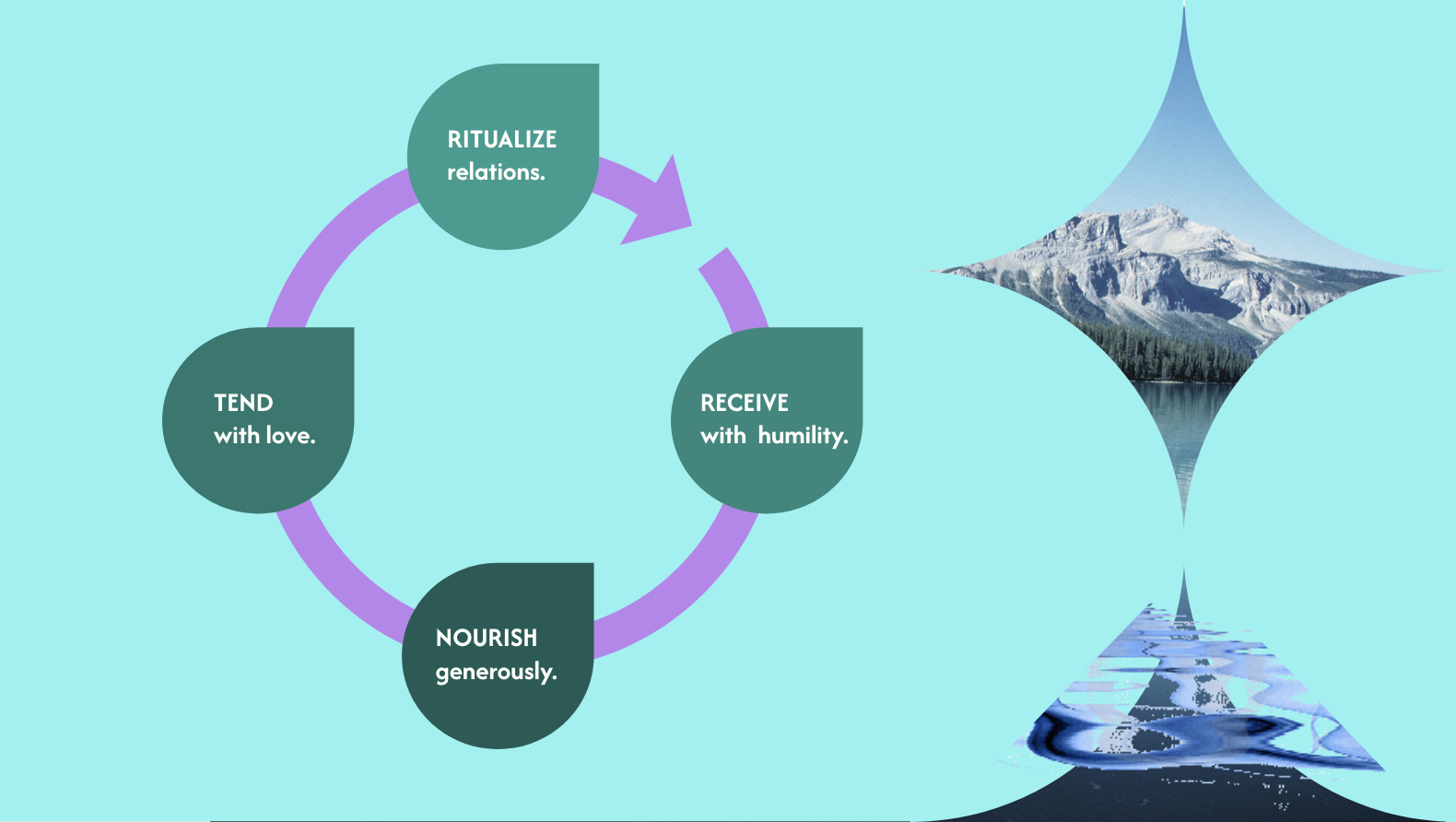
OUR COMMUNITY
“Remembering our bond with the Earth helps us heal our bodies and souls.
”
My work builds community by supporting gatherings that build collective effervescence, the electric sense of energy and belonging identified in 1912 by French sociologist Émile Durkheim. Co-creating and celebrating in community shifts us from individual "I" and ego to "we" and eco. In these spaces we learn to embody the relationships of living systems that nurture joy and trust and share resources and responsibility.
What emerges when we create spaces that are protective rather than punitive, relational rather than hierarchical, and oriented towards care, imagination, and transformation?
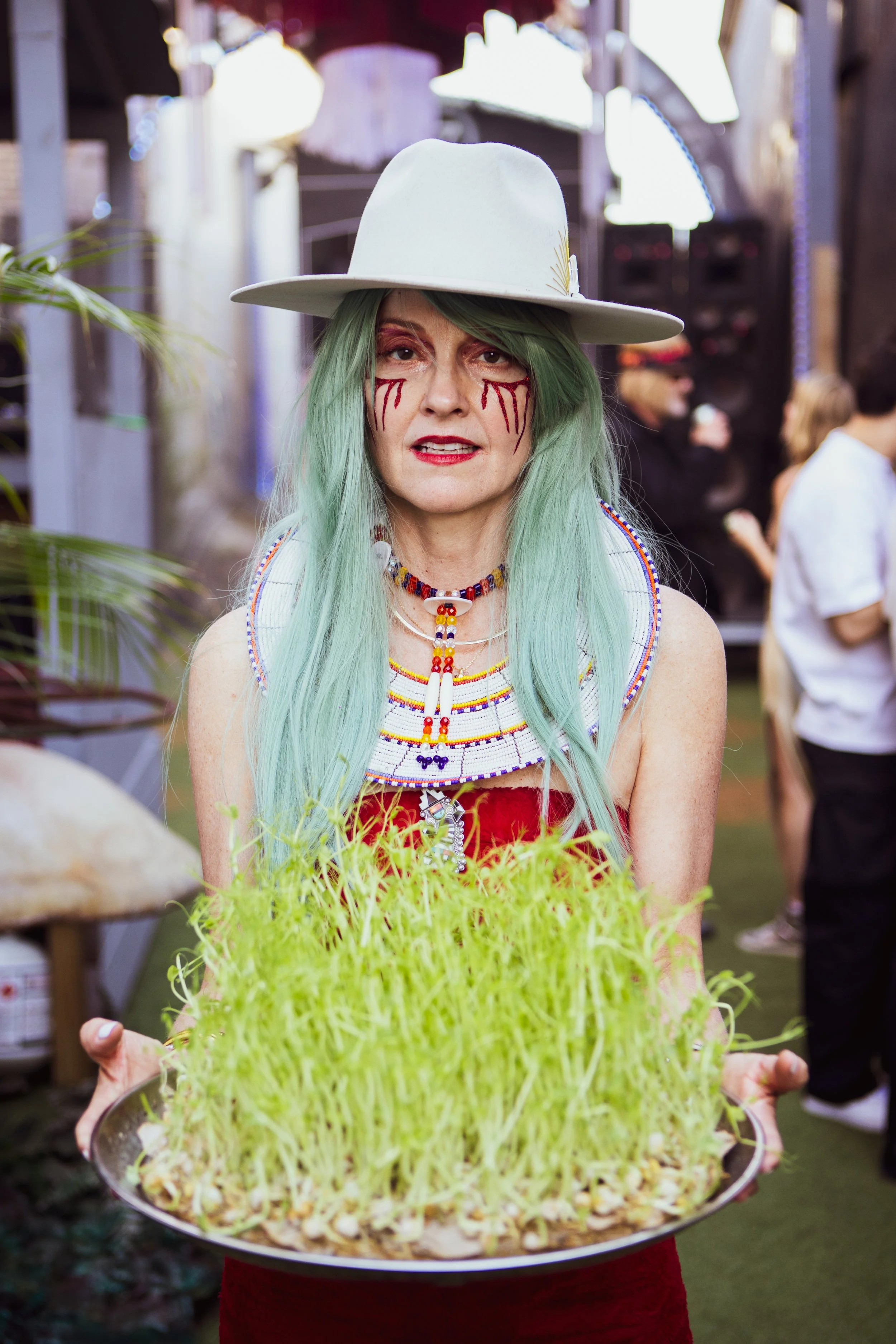
A healing ritual
Today, I grieve the violent separation from our Mother Earth, the violence against people who are in relationship with our Mother Earth.
This violence continues today.
At the same time, we remember we are where everything begins.
l invite you to inhale the fragrant abundance of Mother Earth and eat a baby pea shoot.
— Mother Earth Talks Back
Photo from Hot Situations © Yuliya Skya
“Like dormant seeds, our abundant futures depend on us creating the nourishing conditions for germination.”
OUR CITY
Urban centers, like NYC, emerged in areas that WERE incredibly abundant natural environments.
Our individual and community healing restores relationships and allows us to let go of our ego systems that need to control. Mother Earth is THE regenerative systems expert, learning from and working in relationship with eco systems unlocks endless possibilities.
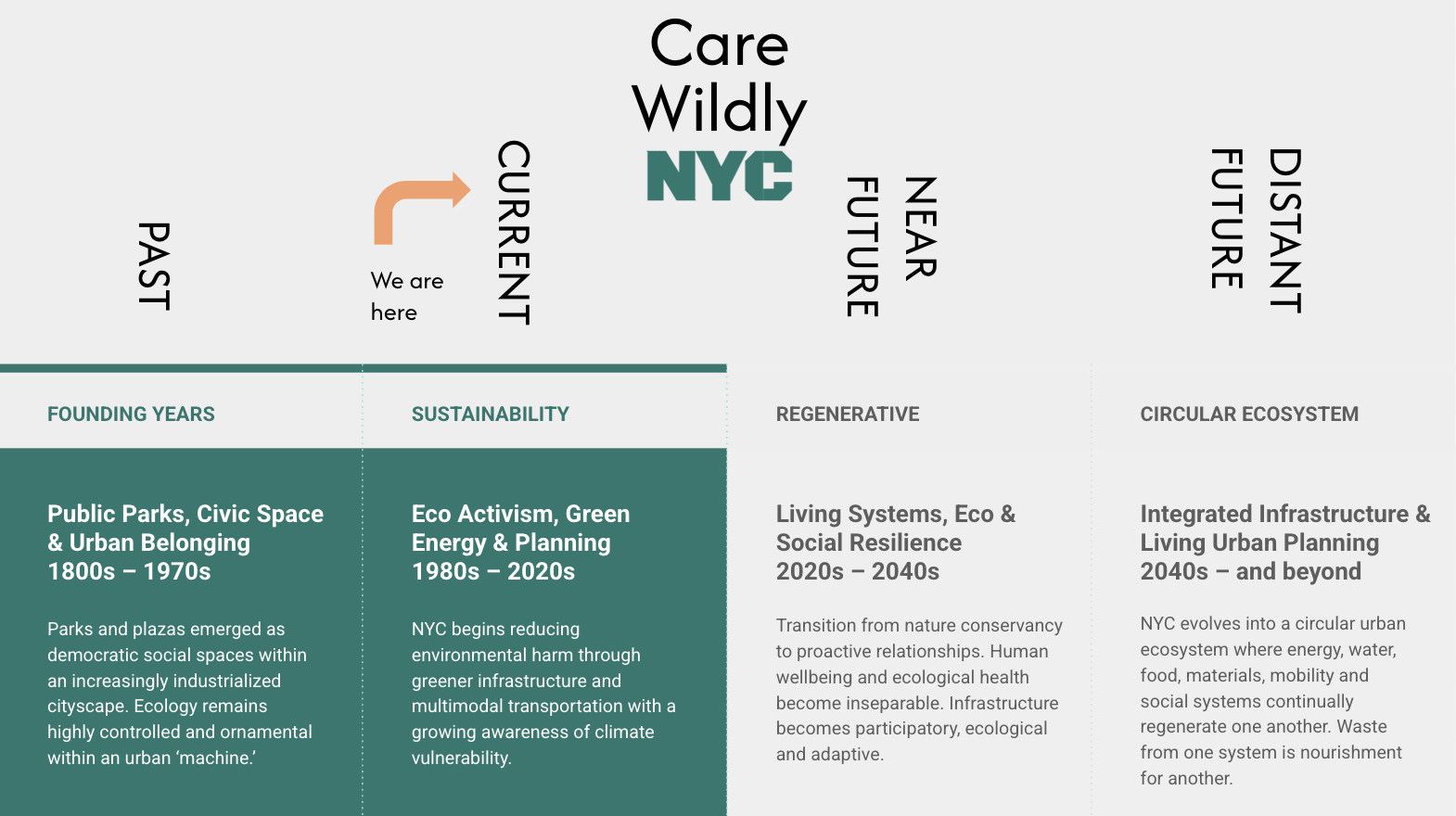
There are hundreds of organizations, communities and government agencies across NYC that are leaders in regenerative practices.
One example is Harlem Grown, edible food gardens started in 2011 by Tony Hillary who was volunteering in public schools in his neighborhood and saw the tremendous need of children for food and housing.
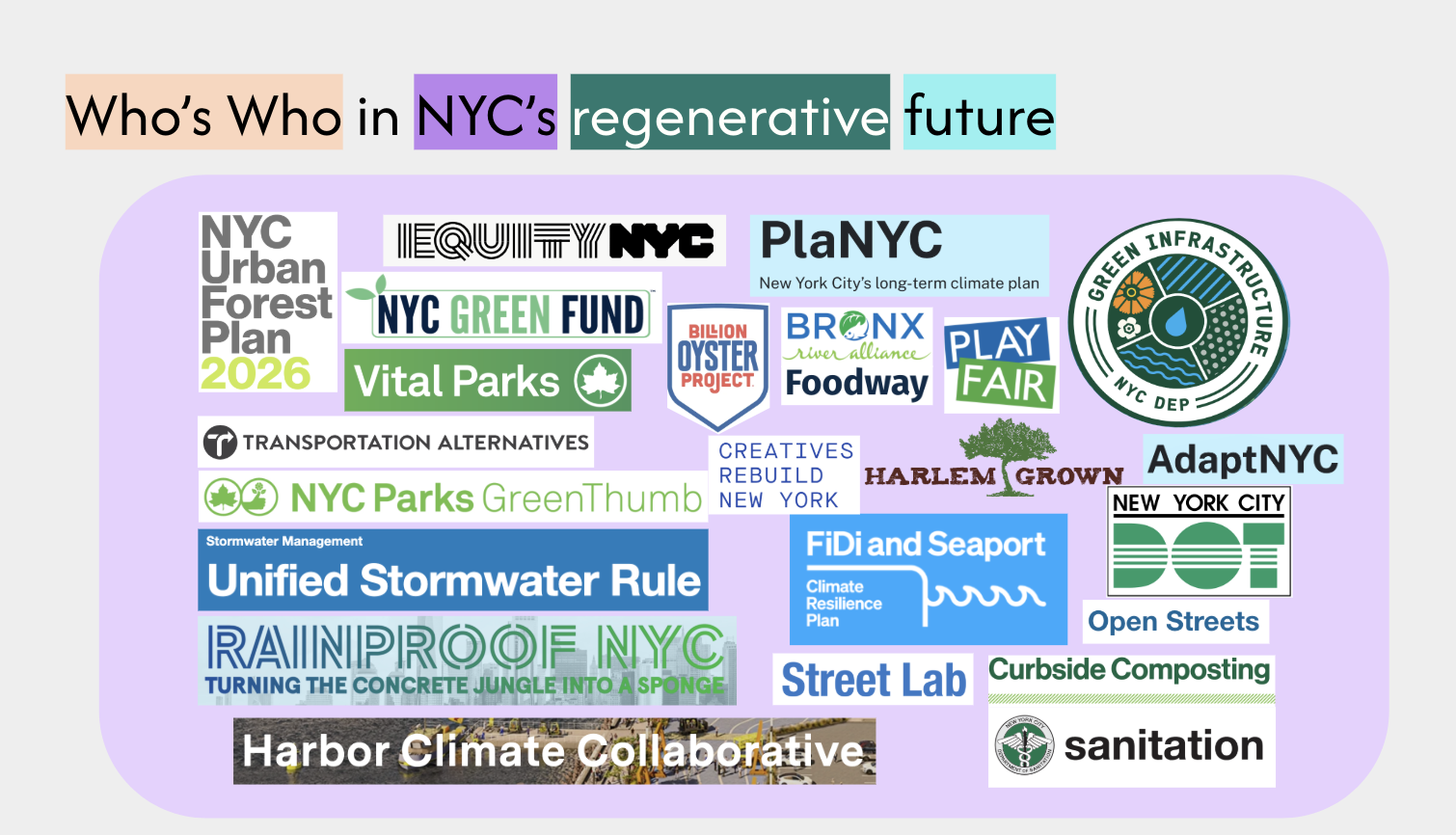
Harlem Grown operates 14 urban farms across a 15 block radius, supporting 30K+ families and distributing 213K+ pounds of fresh food in 2025.
Can you imagine the food security and community healing possible if we had a similar density across NYC?
NYC city planning has shown commitment to nature-based solutions both on land and in our waters. The Urban Forest Plan is an equitably distributed and ecologically diverse urban forest that will cultivate an ecosystem of stewardship, and commit to an increase of 6.6% in tree cover by 2040. Stated benefits of the plan are to cool neighborhoods, help manage stormwater, improve air quality, reduce greenhouse gas emissions, increase habitat for pollinators and migrating birds, and enhance the health of, and quality of life for, all New Yorkers.
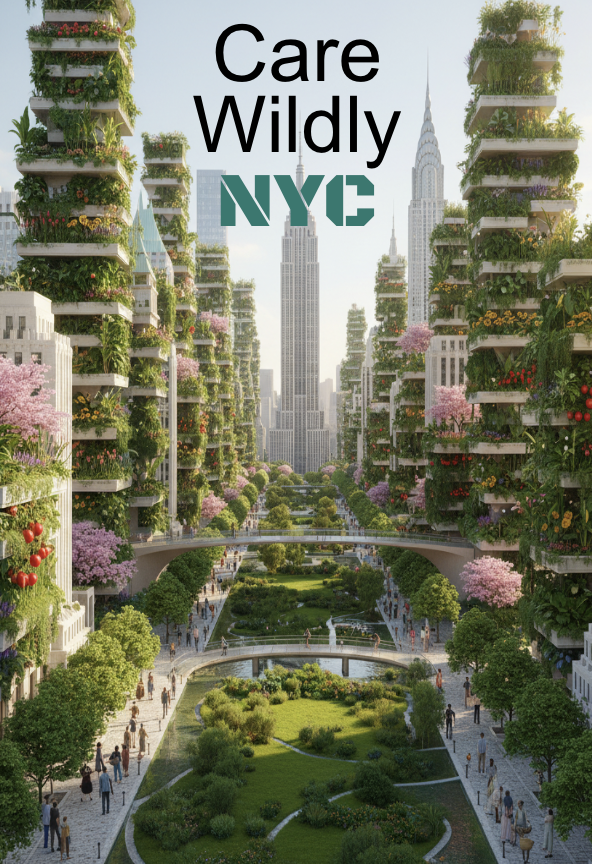
A regenerative NYC
— Takes action on climate justice
— Combats food insecurity
— Creates new jobs and access to resources
— Supports nervous system recovery
— Strengthens community through social cohesion & care systems
— Reconnects us to our abundant Earth cycles and our own resilience
— Supports & accelerates mental health healing process
— Encourages community engagement in our free and open public spaces
AI rendering of regenerative futures by imagineif.nyc
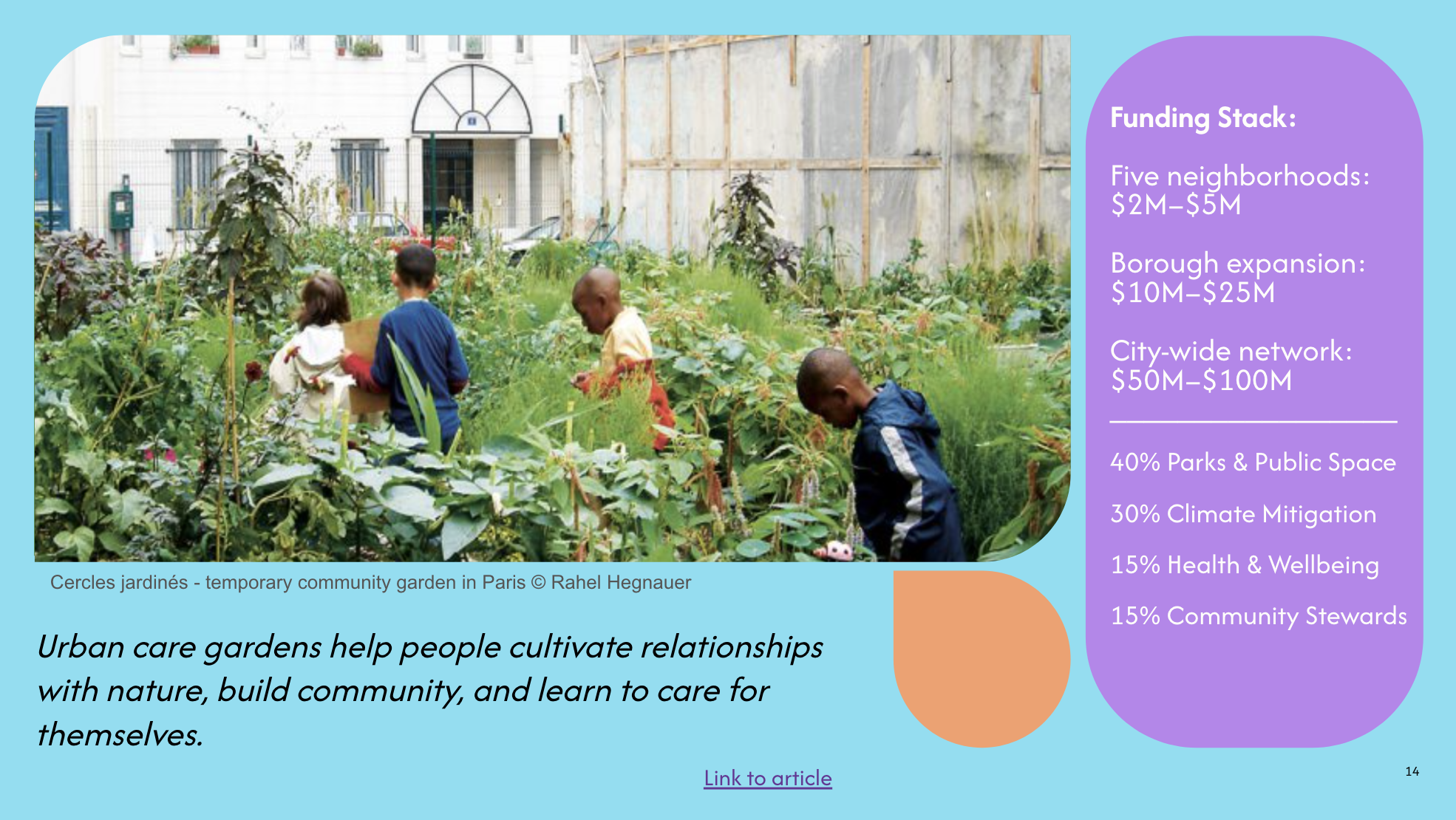
Research out of the Netherlands shows urban care gardens help people cultivate relationships with nature, build community, and learn to care for themselves. In the Netherlands both health insurance and retirement funds are invested in gardening programs to support mental health recovery, healing, and longevity.
Many cities across the globe are investing heavily in nature-based infrastructure by removing hard streetscapes and replacing them with plants and trees in order to help mitigate health and safety risks, such as rising temperatures and flooding.
beyond city parks
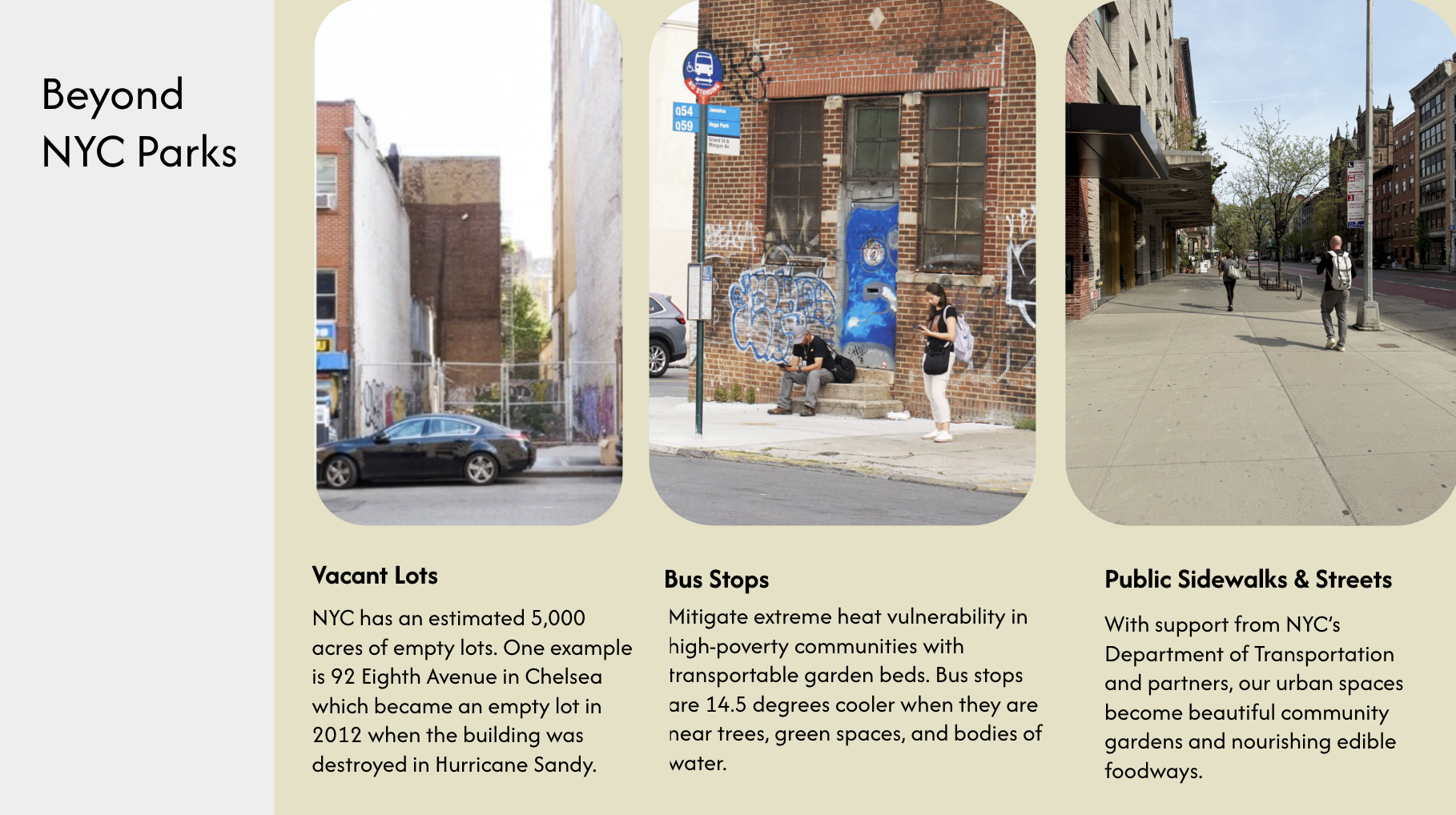
Care Wildly NYC goes beyond city parks—targeting the estimated 5,000 acres of vacant lots plus unshaded streets and bus stops that can be 14.5 degrees hotter without greenery.
Our Earth IS the answer, and she is asking us to dream bigger.
Care Wildly FLORA
While thousands of serviceberry and other edible plants are identified on Falling Fruit as populating our NYC Parks, most of the city is a concrete jungle that floods on average 25+ times from cloudbursts.
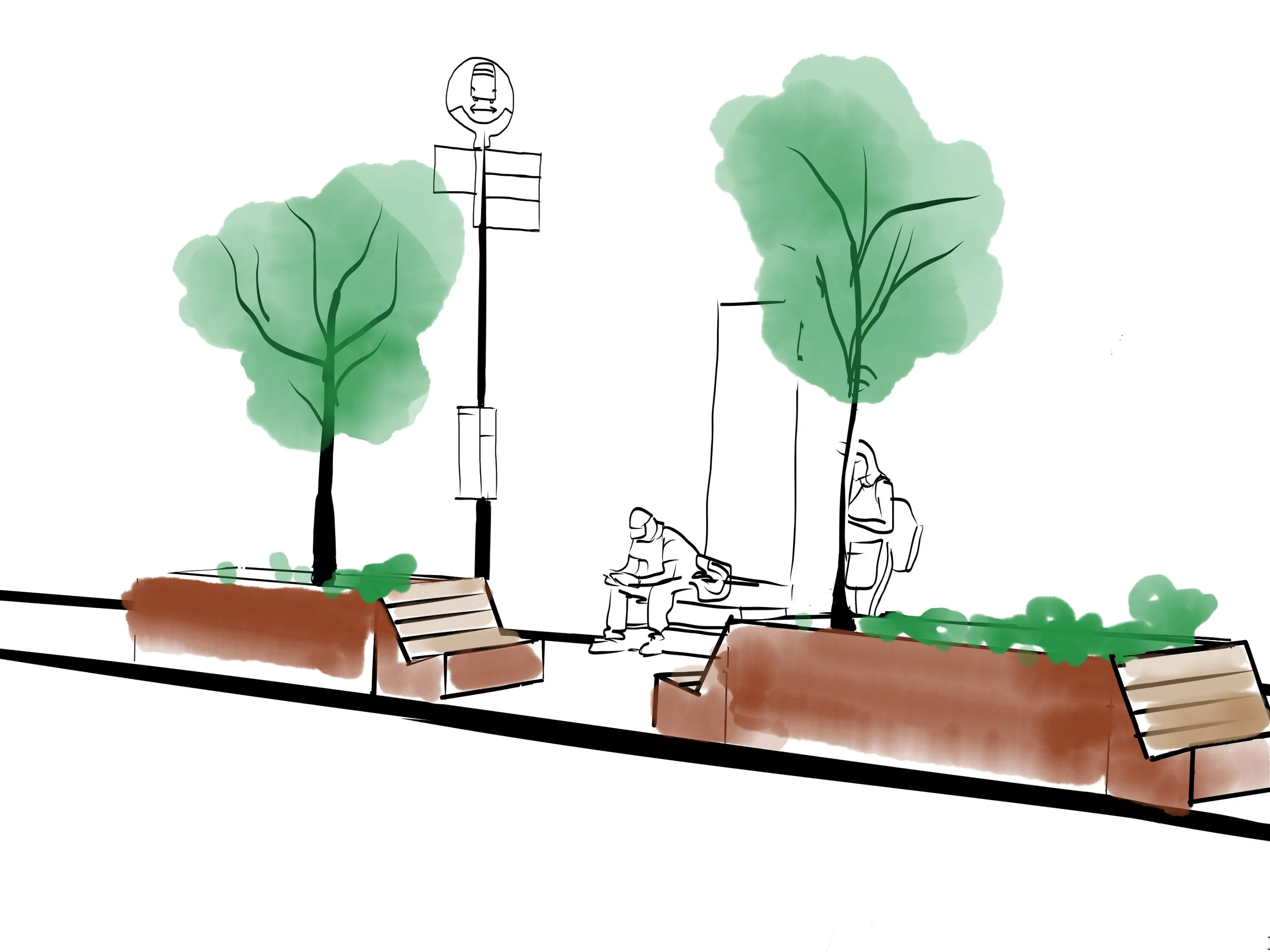
A foodway would aid in achieving the goals of the Urban Forest Plan while also incorporating public furniture for people to rest outdoors in their communities. For example, large transportable planters with benches have been implemented by the Meatpacking District to great success, transforming large sections of 14th Street and Washington Streets into green sanctuaries.
Beautifying streets are good for business and providing public spaces for city residents to garden and grow seasonal edible plants are vital for our social soil, cultivating our mental and physical health. Care Wildly initiatives may well lead to seasonal celebrations throughout our city streets and sidewalks, beautifying and connecting communities in relationship with nature’s abundance.
Care Wildly Design
One large 4x8’ transportable wicking planter with benches on 3 sides will hold approximately 410 gallons of rainwater catchment to reduce flooding, a powerful first step in nature-based solutions to mitigate the risks of climate crises while also improving the quality of life for millions of NYC residents.
Transportable self-watering planters offer city planners the ability to prototype nature-based solutions for street safety, flood prevention, heat resilience, and climate justice. Additionally, planters on top of hard city surfaces is much less expensive than the future possibility of entirely removing those surfaces.
By using local manufacturing with recycled and regenerative materials for the planters and soil supplemented with compost from NYC Department of Sanitation, the project will benefit and work with resources readily available within the local ecosystem.
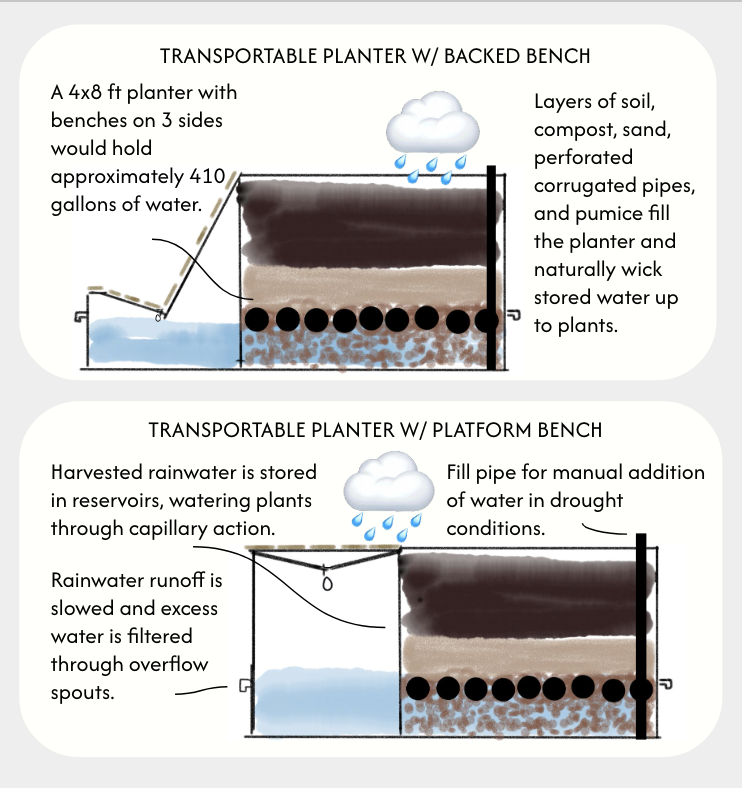
Care Wildly recommends transportable wicking planters are manufactured locally with recycled and regenerative materials. Soil supplemented with compost from NYC Department of Sanitation.
Care Wildly Strategy
Recently we have seen NYC neighborhood organizations litigating to receive their Fair Share of municipal facilities. Currently, higher concentrations of shelters and social services are in lower income areas that often do not have access to quality NYC Parks.
It is the goal of the Care Wildly initiative to prioritize neighborhoods with fewer parks and higher concentrations of shelters and social services, to reverse the historic trend of environmental and social injustices.
Transforming city streets into edible sanctuaries for wildlife and neighbors alike should start with areas who will benefit the most.
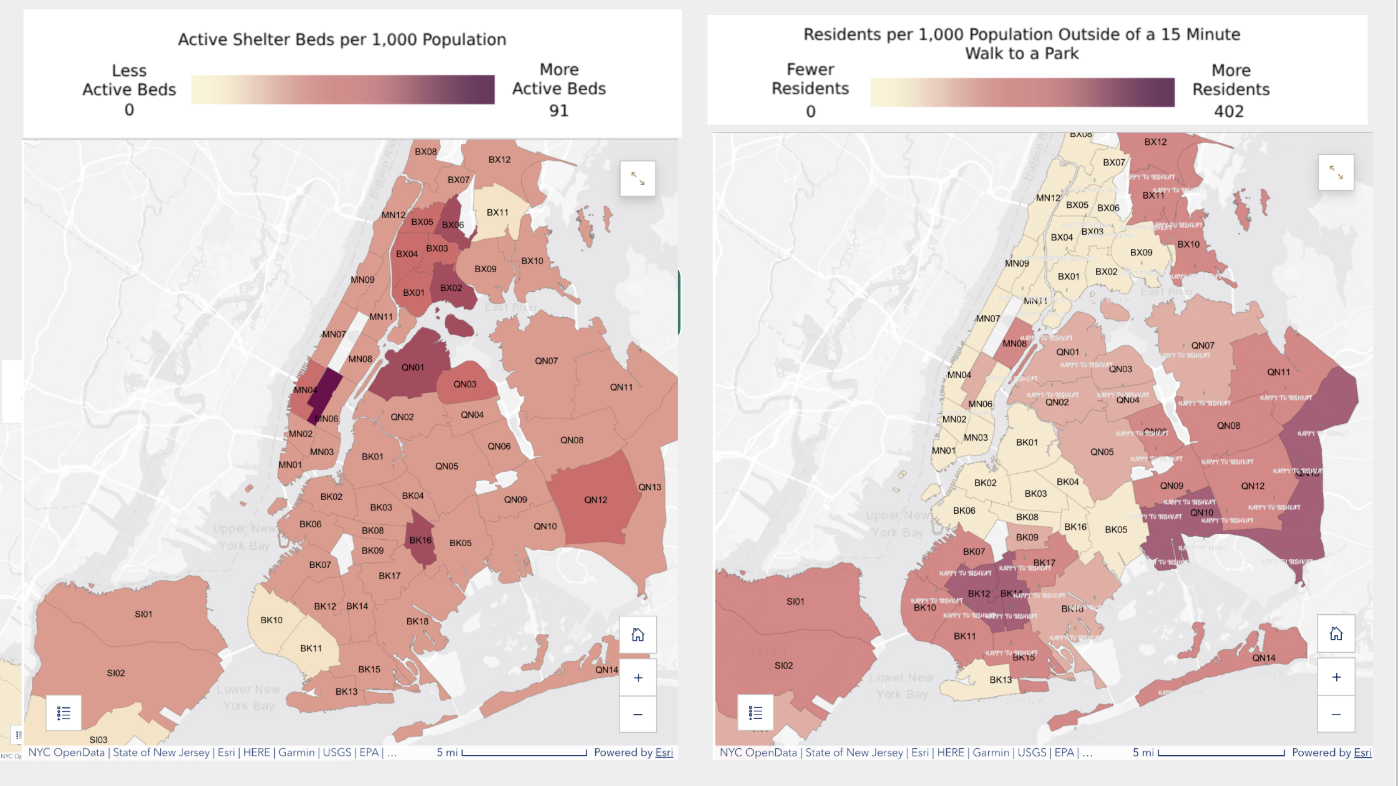
Fair Share maps of NYC from 2023 (resource was removed from the web during the summer of 2026)
While foodways may not seem vital at first pass, the reality is they are desperately needed to help combat food insecurity, provide community spaces to counter the epidemic of loneliness, and provide medically proven mental health and healing benefits to the NYC community.
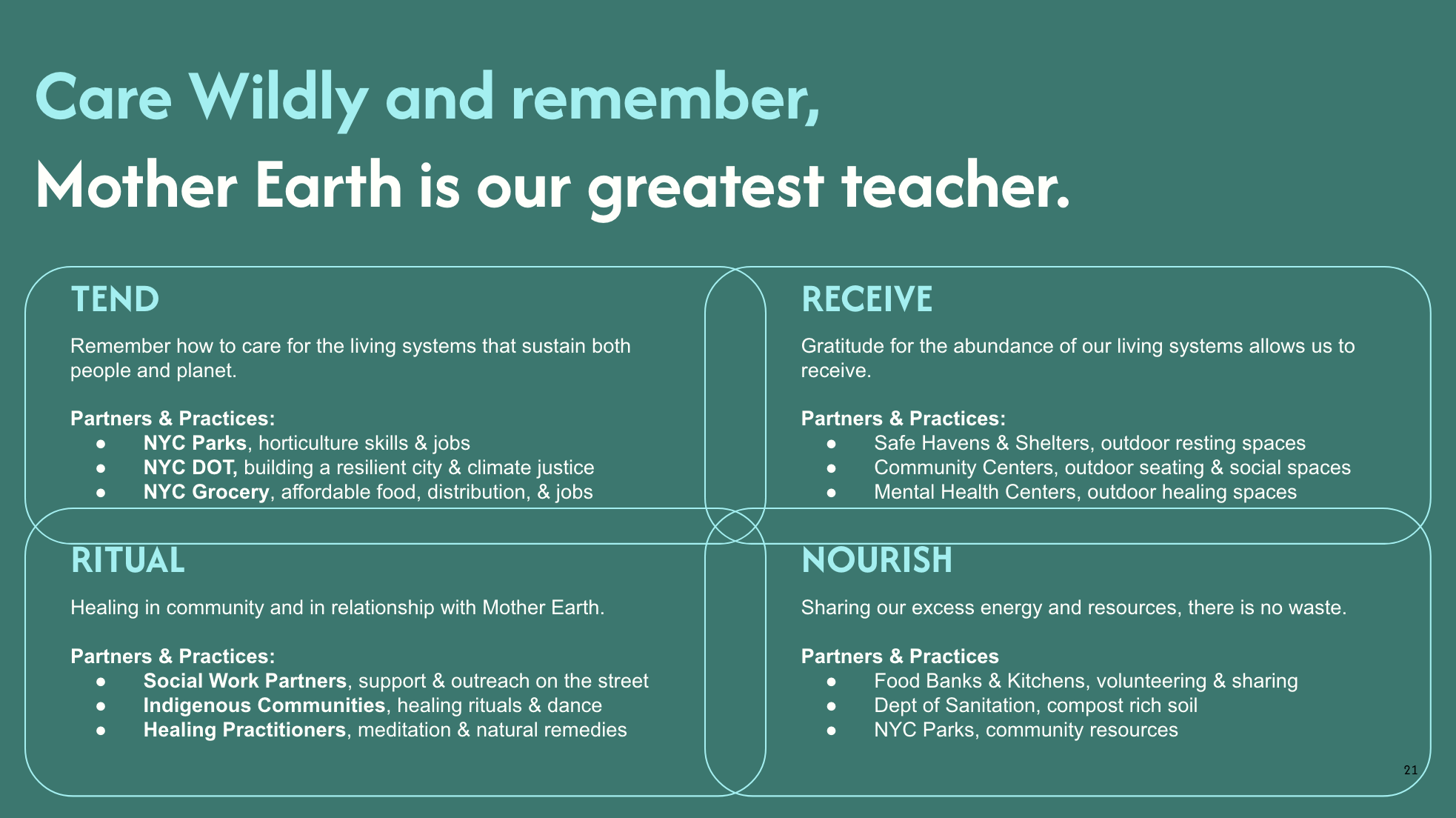
Below is an overview of systemic challenges that NYC, and many large cities around the world, are currently facing. Reconnecting to the abundance of our Earth through foodways will be a step forward in building the regenerative mindsets needed to collaboratively resolve our most wicked problems.
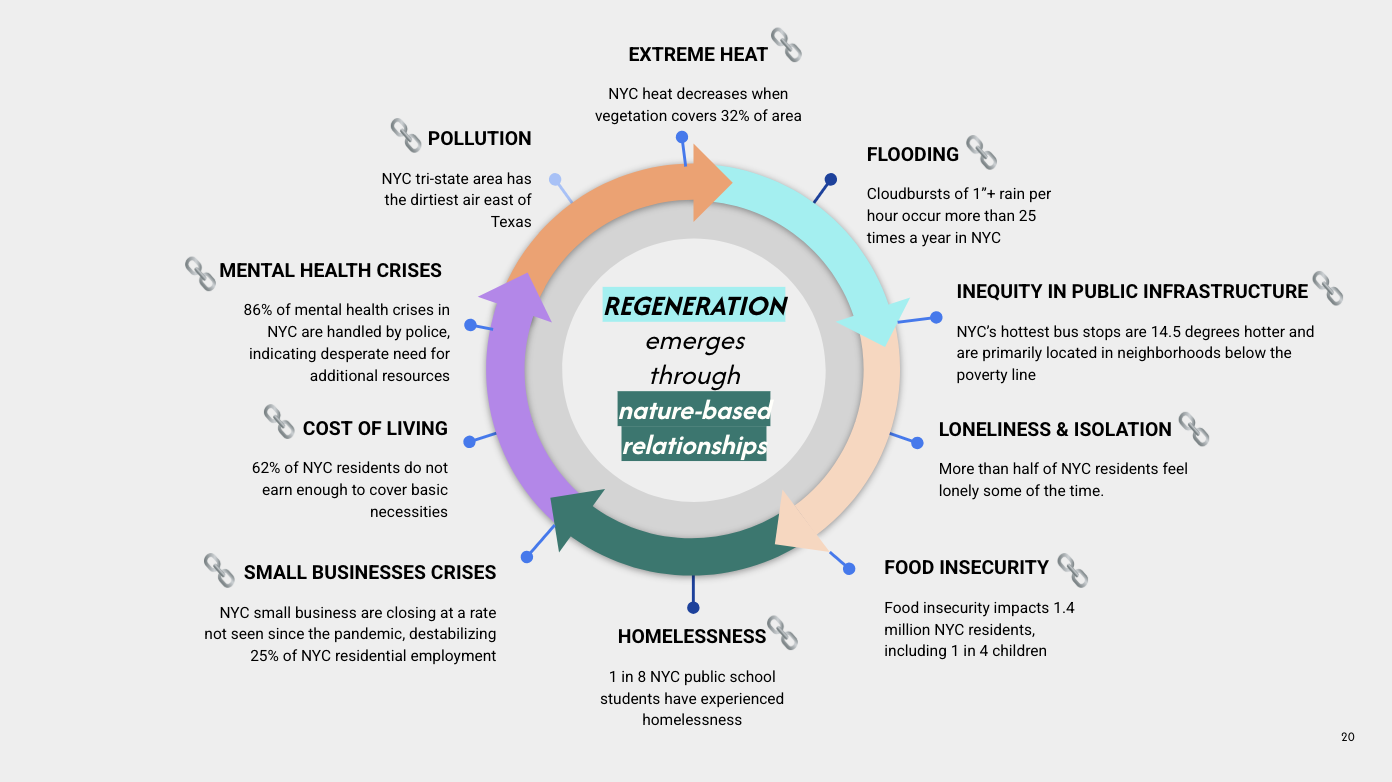
Every wicked problem created by urban modernization is very real and incredibly challenging to resolve with our modern technologies and financial markets. This is why we must remember and cultivate a right relationship with nature as part of our birthright on our planet Earth.
Part of this work is to grieve the harsh reality endured by many struggling to survive in a city where community has forgotten how to cultivate sustenance given freely by Mother Earth’s abundance.
“World making requires love, kindness and care.
”
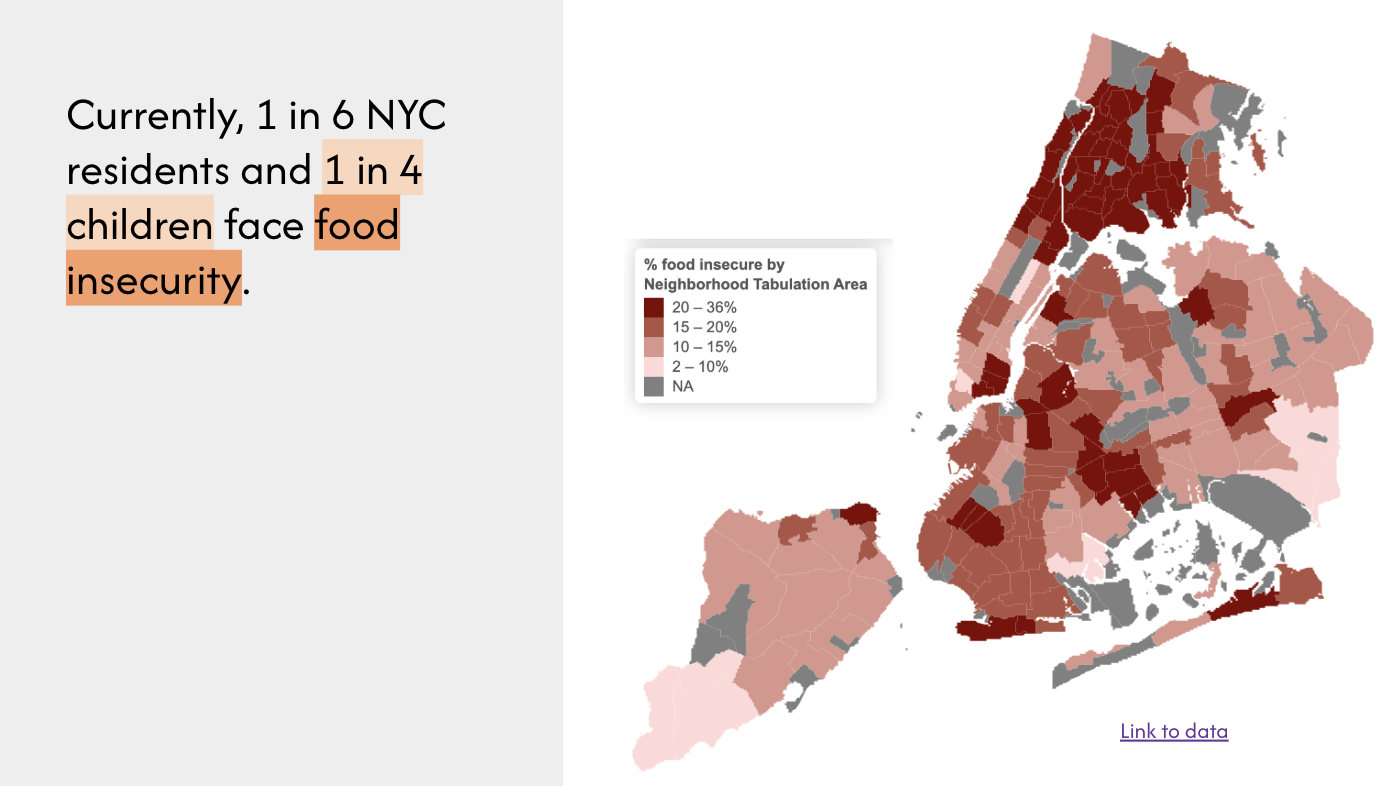
“As we work to heal the earth, the earth heals us.”
Care Wildly Resources
Cities around the world have shown that introducing urban care gardens into our cities helps teach us to care for ourselves.
Beyond grassroots initiatives, the above funding stack shows how combining private and public resources would escalate the regenerative transition.
Currently, I am building community to prototype a Care Wildly NYC install on an identified block in downtown Manhattan. The block has been chosen because it hosts multiple vital social services for our homeless community and it doesn’t benefit from nearby city parks. If you would like to learn more about this project and/ or would like to support please don’t hesitate to contact us.
Are you part of a community who cares wildly? Let’s talk!